Customer acquisition cost (CAC): how to calculate it and what’s a good LTV:CAC ratio
CAC = marketing and sales spend ÷ new customers. Here's the formula, the LTV:CAC ratio, a worked example, and how online sellers can lower CAC.
By Sharjil Hameed · Published November 19, 2026 · Last reviewed November 24, 2026 · 2 min read · How we fact-check

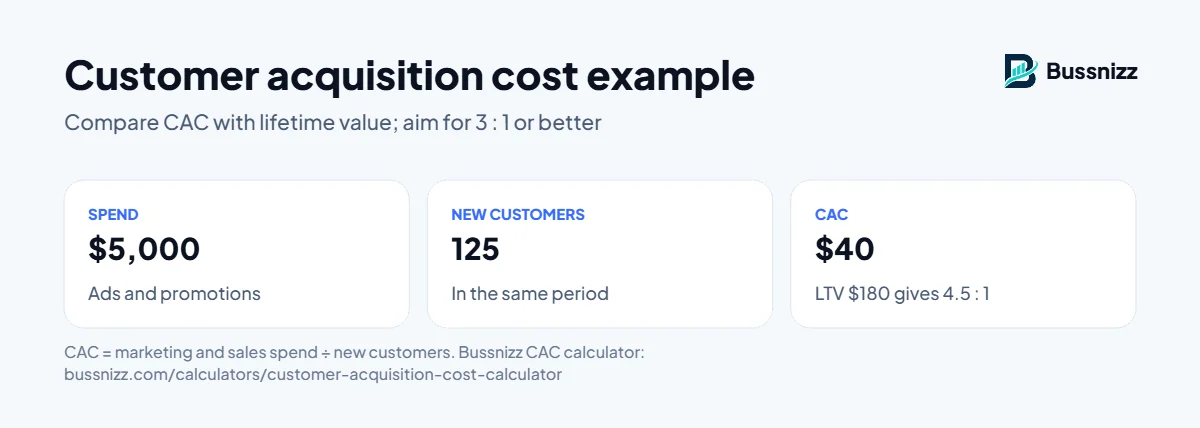
Short answer: CAC = marketing and sales spend ÷ new customers gained. Spend $5,000 and win 125 new customers and your CAC is $40. If each customer is worth $180 in lifetime profit, your LTV:CAC ratio is 4.5 : 1. Work out yours with the customer acquisition cost calculator.
What the CAC calculator does
The CAC calculator divides what you spent to win customers by how many you won, then compares it with customer lifetime value (LTV). The ratio tells you whether growth is paying for itself.
How CAC is calculated
- CAC = (ads + promotions + influencer fees + marketing tools + sales costs) ÷ new customers
- LTV : CAC = lifetime value ÷ CAC
Use the same period for both: if you count January’s ad spend, count January’s new customers.
Worked example
- Marketing and sales spend: $5,000
- New customers: 125
- CAC: $40
- Lifetime value (profit): $180
- LTV : CAC = 4.5 : 1
What’s a good LTV:CAC ratio?
A widely used rule of thumb is 3 : 1 or better: each customer brings in three times what it cost to win them. Below 1 : 1, you lose money on every new customer. Far above 5 : 1 can mean you’re underspending and growing slower than you could.
CAC for marketplace sellers
On Etsy, Amazon or eBay, much of your traffic comes from the marketplace, and you pay for it through fees rather than a marketing budget. Count paid ads you run (Etsy Ads, Amazon Sponsored Products) and Offsite Ads fees as acquisition cost. On your own Shopify or WooCommerce store, almost every new customer has a CAC, which is why unit economics matter more there.
How to lower CAC
- Turn off ads that don’t pay back in profit, not just clicks.
- Raise conversion: better photos, clearer shipping costs, reviews.
- Grow repeat customers with email; a returning customer has no new acquisition cost.
- Use organic search, guides and social content that keep working after you publish them.
Options in the calculator
- Marketing and sales spend
- New customers
- Customer lifetime value (from the LTV calculator)
Why use this calculator
- CAC and LTV:CAC together, the two numbers investors and smart sellers watch.
- Free and private, with a one-page printable report.
- Linked to LTV and unit economics so you can check the whole picture.
Conclusion
Know what a customer costs and what they’re worth. If LTV:CAC is under 3 : 1, fix conversion or retention before spending more on ads.
Frequently asked questions
What is the formula for customer acquisition cost? CAC = total marketing and sales spend ÷ number of new customers in the same period.
What is a good LTV to CAC ratio? 3 : 1 is a common target.
Should I include ad spend on returning customers? Ideally no. CAC is for new customers; separate retargeting spend if you can.
Does CAC include salaries? For a full CAC, include marketing and sales staff costs. Small sellers often use ad spend only; just be consistent.
How is CAC different from cost per acquisition (CPA)? CPA usually measures cost per action (a sale or sign-up) in one ad campaign; CAC measures the cost of a new customer across all channels.
The 3 : 1 ratio is a guideline, not a rule. Use your own margins and repeat-purchase data.
Run the numbers yourself
Free calculators with every fee and formula shown.
 Etsy Profit CalculatorWhat you keep after Etsy's listing, transaction, processing, and Offsite Ads fees, for sellers in 7 countries.
 Amazon FBA Profit CalculatorProfit per unit on Amazon FBA after referral fees, fulfillment, storage, PPC, and your selling plan.