Customer lifetime value (LTV): how to calculate it for an online store
LTV = average order value × orders per year × years as a customer × gross margin. Here's the formula, an example, and how LTV sets your maximum ad spend.
By Sharjil Hameed · Published November 19, 2026 · Last reviewed November 24, 2026 · 2 min read · How we fact-check

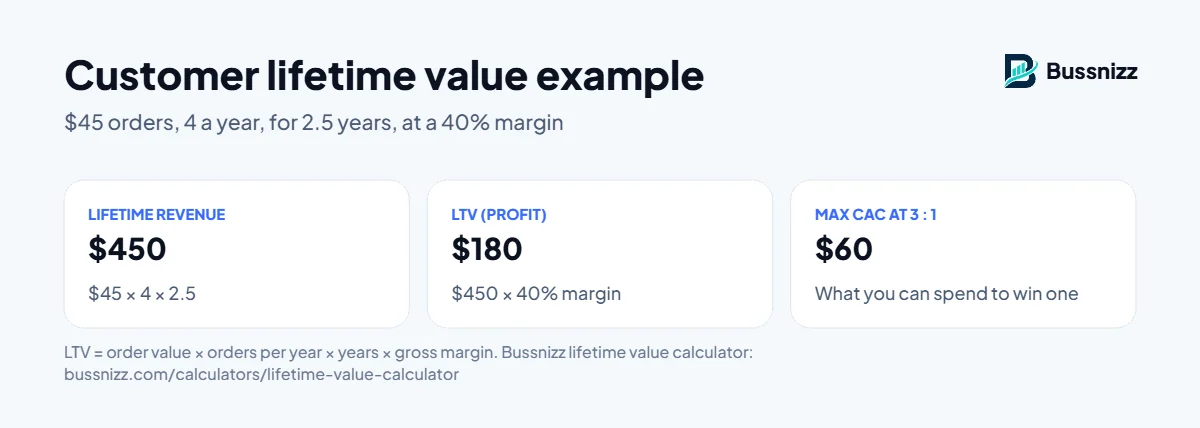
Short answer: lifetime revenue = average order value × orders per year × years as a customer, and LTV (profit) = lifetime revenue × gross margin. A customer who spends $45 four times a year for 2.5 years brings in $450 of revenue; at a 40% margin that’s an LTV of $180. To keep a 3 : 1 ratio, you can spend up to $60 to win them. Run it in the lifetime value calculator.
What the LTV calculator does
The customer lifetime value calculator estimates how much profit one customer brings over the whole relationship, not just the first order. It also shows lifetime revenue and the maximum acquisition cost you can afford at a 3 : 1 LTV:CAC ratio.
How LTV is calculated
- Lifetime revenue = average order value × orders per year × years as a customer
- LTV = lifetime revenue × gross margin
- Max CAC (3 : 1) = LTV ÷ 3
Using gross margin turns revenue into profit, which is what you can actually spend on winning the customer.
Worked example
- Average order value: $45
- Orders per year: 4
- Years as a customer: 2.5
- Gross margin: 40%
- Lifetime revenue: $450; LTV: $180; max CAC at 3 : 1: $60
Where to find your numbers
- Average order value: total sales ÷ number of orders (from your Shopify, Etsy or Amazon reports).
- Orders per year: orders ÷ unique customers over 12 months.
- Years as a customer: if you don’t know, start with 1 to 2 years and refine as data builds.
- Gross margin: see how to calculate gross profit.
How to raise LTV
- Email past buyers with new products and restocks.
- Bundles and add-ons to raise order value.
- Consumables and refills that bring customers back on a schedule.
- Great packaging and fast replies, which drive repeat purchases and reviews.
Options in the calculator
- Average order value, orders per year, years as a customer, gross margin
Why use this calculator
- Profit-based LTV, not inflated revenue LTV.
- Shows your ad ceiling at 3 : 1 instantly.
- Free, private and printable. Pair it with the CAC calculator.
Conclusion
LTV tells you what a customer is really worth, and therefore how much you can spend to get one. Raise it with repeat purchases, and check it against CAC every quarter.
Frequently asked questions
What is the formula for customer lifetime value? LTV = average order value × purchase frequency × customer lifespan × gross margin.
Should LTV use revenue or profit? Profit (gross margin) is safer for spending decisions; revenue LTV overstates what you can afford.
What is a good LTV? One that’s at least three times your customer acquisition cost.
How do I calculate LTV for a new store with little data? Use conservative estimates (one to two orders a year, one to two years) and update as real data comes in.
How does LTV relate to CAC? Divide LTV by CAC; aim for 3 : 1 or better. See the CAC guide.
LTV is an estimate based on averages. Recalculate as your repeat-purchase data grows.
Run the numbers yourself
Free calculators with every fee and formula shown.
 Etsy Profit CalculatorWhat you keep after Etsy's listing, transaction, processing, and Offsite Ads fees, for sellers in 7 countries.
 Amazon FBA Profit CalculatorProfit per unit on Amazon FBA after referral fees, fulfillment, storage, PPC, and your selling plan.